
All-Terrain & Off-Road
How to Choose All-Terrain Tires: A Guide for Distributors
A practical guide for tire distributors on selecting all-terrain patterns, sizes and load ratings, with current US market context and a wholesale ordering checklist.
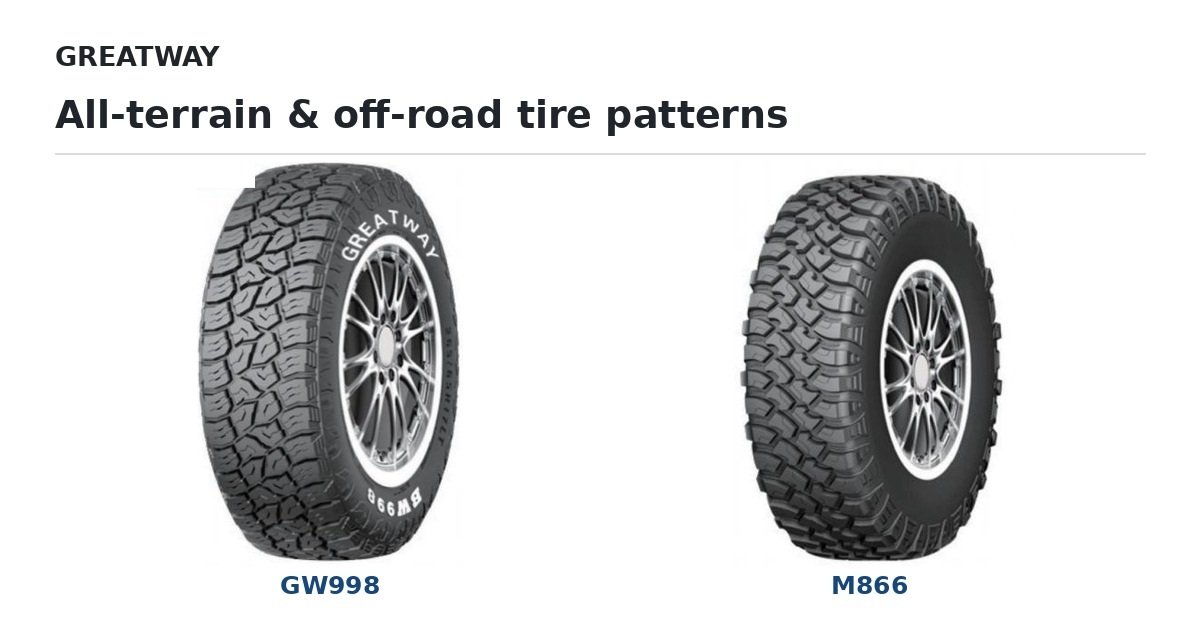
Choosing an all-terrain range usually starts with a simple question: which pattern should come first? The honest answer is that it depends — on the vehicles in your market, the roads they use every day, and what drivers expect from the tire during a normal working week, not just on a weekend trip off-road.
A pattern that moves quickly in one market can be slow in another. That is rarely about the tire alone. It comes down to fit: the right balance of road manners and off-road grip for the way those vehicles are actually used.
Forget "best" — think "right for your customers"
There is no single best A/T tire. There is a right one for a pickup that spends Monday to Friday on pavement and Saturday on a farm track, and a different right one for a vehicle that works on construction sites and rough ground most of the week.
Highway tires are built mainly for paved roads. Mud-terrain tires go to the other extreme, and that off-road grip usually comes with more noise and a harder ride on the road. All-terrain sits in between, which is why it sells — and also why it is easy to stock badly. A pattern that is too mild will not suit drivers who regularly leave the pavement. One that is too aggressive can be more tire than everyday drivers want.
The Greatway range shows the spread clearly. Put the GW998 next to the M866 — the two patterns on the cover of this article — and the tread designs tell the story before a single specification is read. Different shoulders, different tread blocks, different jobs. The useful question is not "which tire is better", but "who is going to drive on it, and where".
Sizes: your local fleet decides, not the catalog
A common mistake is taking a little of everything. The result is predictable: slow stock in odd sizes, and shortages in the sizes dealers ask for most.
Start instead with what is on the road locally. Which pickups and SUVs are common? What do dealers get asked for? Sizes such as 265/65R17, 265/70R17 and 285/70R17 come up often in this segment, but "often" is not a reason to order them if the local fleet runs something else.
One listed size shows how a fitment should be read. The Trail AT in the Greatway product range is listed as 245/60R18 SL 105H. Each part of that marking means something specific: 245 is the nominal section width in millimeters; 60 is the aspect ratio, so the sidewall height is nominally 60% of the section width; R is radial construction; 18 is the rim diameter in inches; SL is the Standard Load designation; 105 is the load index; and H is the speed symbol.
A matching size alone is not enough. Rim compatibility, load capacity, speed rating and clearance still need to be checked against the vehicle manufacturer's recommendations before a replacement tire is recommended.
Working vehicles need a closer look
For pickups that tow or carry loads, load capacity matters as much as size. Two tires can share a nominal size and a similar appearance, and still carry different load specifications.
That is why a useful purchasing brief covers more than a size list: the destination market, the applications the vehicles are used for, and the load and speed requirements for each fitment. Ply rating also needs care — it is a strength designation, not necessarily the actual number of plies in the tire.
Looks are not the whole story
Tread design matters, but appearance cannot tell you how long a tire will last, how it will grip in the wet, or how well it will stand up to rough ground. Before comparing patterns, it is worth asking for the technical side as well: construction details, load and speed tables, documentation for the destination market, and any test results that are available for that specific model. Two patterns can look similar in a photo and be built quite differently, and that documentation is what separates a guess from an informed order.
A word on the market right now
In the United States, the U.S. Tire Manufacturers Association (USTMA), in its July 2026 forecast released on August 6, 2026, projected 37.1 million replacement light-truck tire shipments for 2026, compared with 37.7 million in 2025 — a decline of 1.6%, although the figure remains 14% above the 2019 level.
Two things are worth noting about that forecast. First, it covers the broader replacement light-truck segment, not all-terrain tire sales specifically, so it should not be read as a direct measure of A/T demand. Second, markets outside the United States will follow their own vehicle fleets and seasons. Used carefully, though, it points in a sensible direction for planning an assortment: favor proven sizes, watch actual dealer inquiries, keep an eye on slow-moving stock, and test a new pattern in a modest quantity before committing to a large order.
If you are putting an order together
Send the basics: destination country, target applications, the patterns and sizes under consideration, quantities per size, and any packaging or private-label requirements. Current availability and commercial terms can then be confirmed directly, based on a real brief rather than a guess.
The full range is on the products page, the specification tables are in the product catalogs, and inquiries are welcome through the contact page or by email at info@duplospneus.com.
The Greatway team